Plan: lay it all out first
When someone takes on a task, they usually start with a plan: “I’ll do this first, then that — it should take about an hour.” You understand their reasoning, you can question it, and you both agree on what success looks like. AI should do the same. Before it acts, it should show a clear, legible outline of what it’s about to do:
Planned steps with plain-English titles.
A confidence score per step (and why it’s that score: data coverage, source quality, tool reliability, spec clarity).
Receipts: citations, files, timestamps (just enough to check).
Controls beside each step: Edit, Skip, Gate on approval, Sandbox only.
This mirrors how you work with people. A teammate says, “I’ll collect the metrics and outline the strategy. The scope’s a bit fuzzy, so I’d love your eyes on it. Once done, I'll make the slides. I’m decent in PowerPoint, but if it’s going to be presented, a designer should give it a polish.” You nod, fix the fuzzy part, and green-light the rest. That’s calibrated trust.
Execute: act, but keep me in the loop
Once approved, the execution starts. You can see progress as it happens — what step it’s on, how confident it feels, and when it hits uncertainty.
At any point, you should be able to check in, like slacking someone “sup?”, and instantly see what’s going on. Transparency shouldn’t require a debug mode — it should just be part of the experience.
It’s important to be able to give feedback along the way. “This part missed the mark,” “this output isn’t quite right”, and expect it to stick. One mistake is fine. Repeating the same one after feedback isn’t. That’s the line between earning trust and losing it.
Audit: bring the receipts
After the task is done, the system gives you a clear trail of what it did, what sources it used, and how each step scored. You see predicted vs. actual confidence, what worked, and what didn’t go as planned.
That’s the same pattern that keeps people accountable, trust comes from results, not promises. Each clean audit earns a bit more confidence. Each miss tightens the guardrails. The goal for the agent is not only to fix the issue, but stops repeating it. That’s how trust compounds.
Why this works
People earn trust by following through and improving, not by sounding like they know what they’re doing. When someone listens, adjusts, and doesn’t make the same mistake twice — that’s when trust becomes real.
AI should play by the same rule. It doesn’t need to sound smarter, it needs to earn trust the human way — by showing its plan, staying visible, taking feedback, and getting it right.
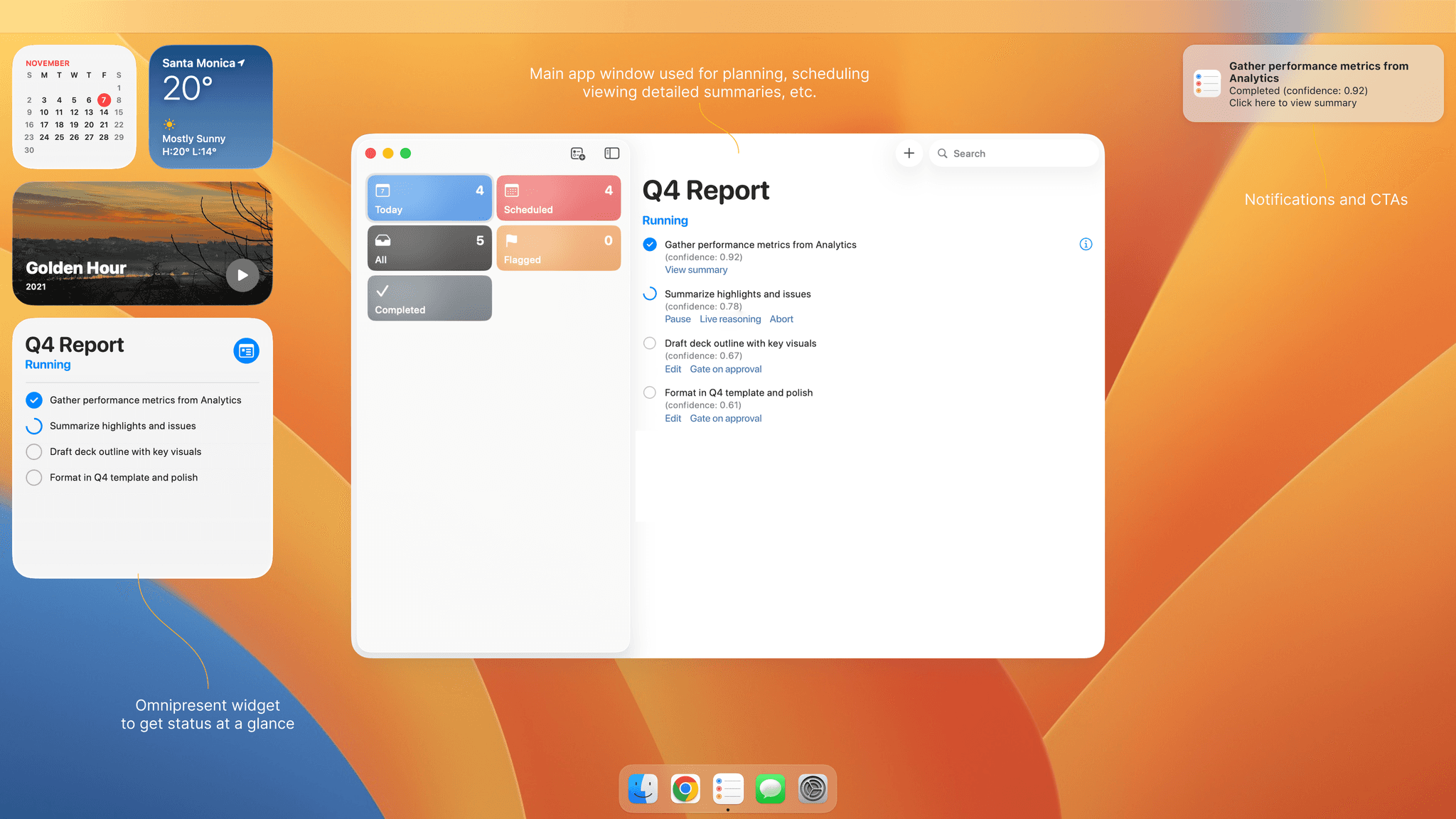
Figure A: OS level playout
Copyright © 2025 Product, LLC