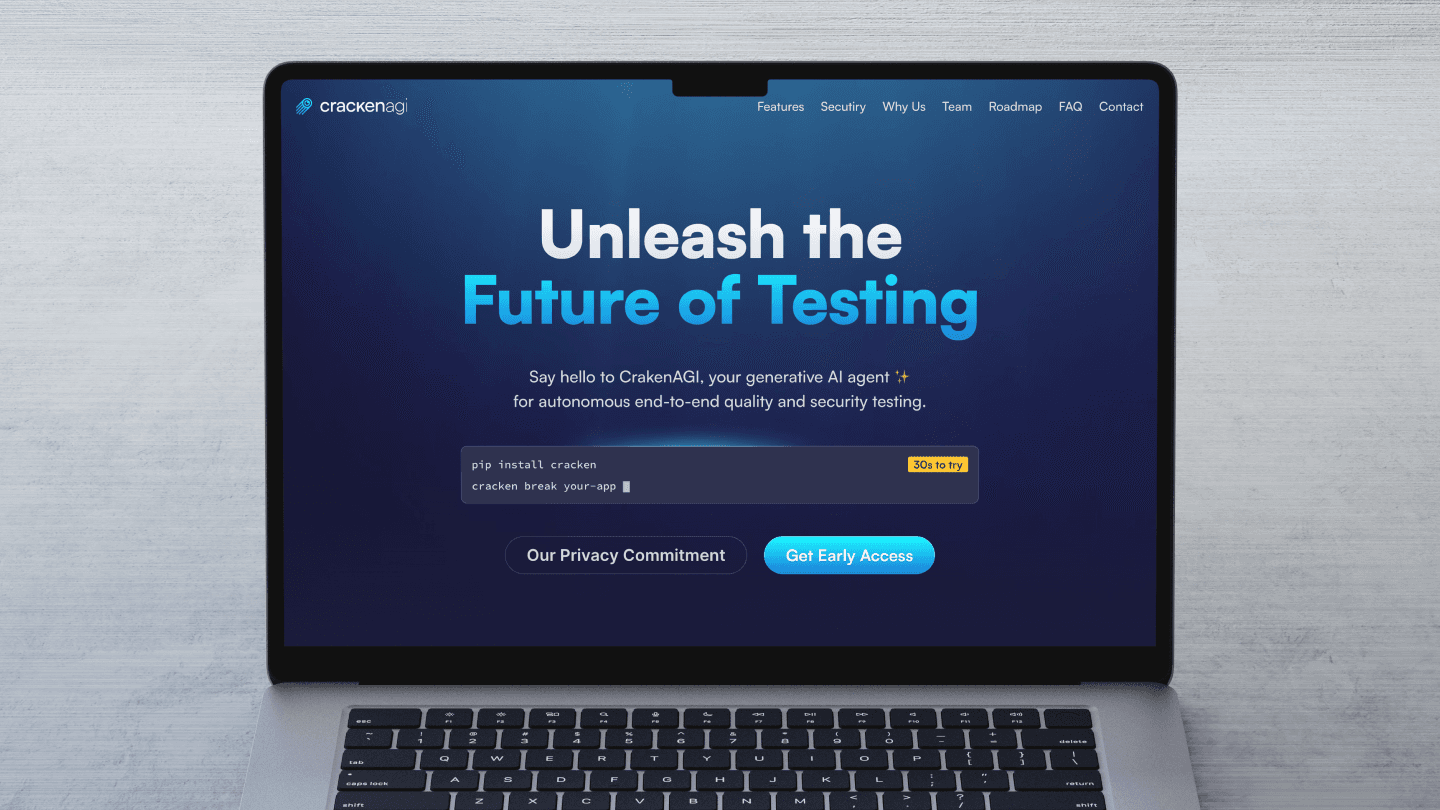
Cracken AGI is a generative AI agent that runs end-to-end quality and security testing — a powerful but abstract early-stage idea that had to look and sound like a fundable product, not a research demo. The brand's job was to make it credible enough to pitch and raise on.
I created the Cracken AGI brand from scratch — the visual identity, the verbal system, the web experience, and the pitch deck — so an autonomous-testing agent had one coherent identity across its website and the investor pitch deck.
Role
I led branding, web design, and the pitch deck — the identity, the visual and verbal system, and the story to make an early, abstract AI testing agent credible to investors and ready to raise on.
What shipped
- Created the Cracken AGI brand and identity from scratch.
- Built a dark, cyan-accented visual language, anchored by a rocket-and-particles motif.
- Defined a verbal system that speaks to developers in their own idiom.
- Carried one coherent identity across the website and an investor-ready pitch deck.
Selected decisions
- Built a dark, cyan-accented identity, anchored by a rocket-and-particles motif, for a quality-and-security product.
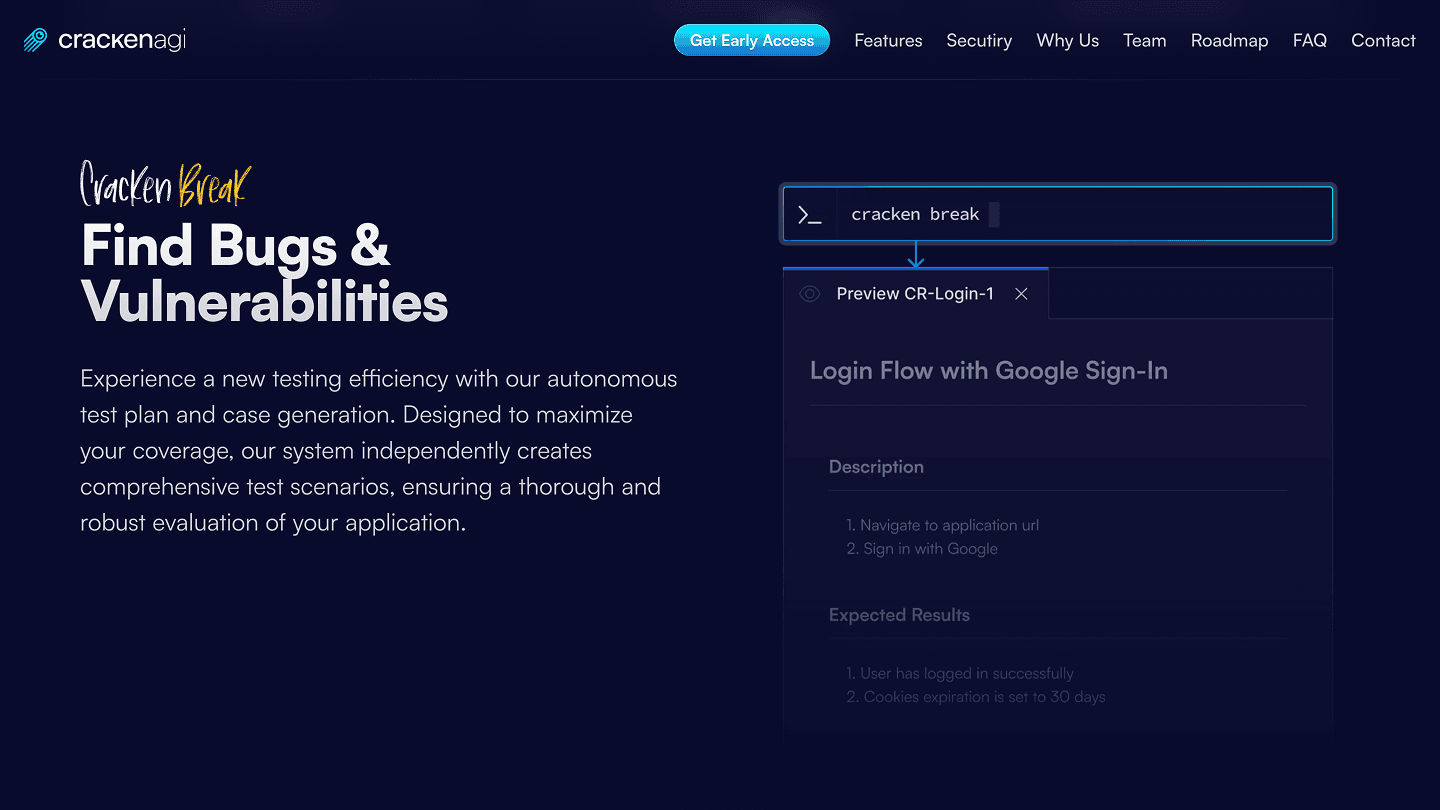
- Defined a verbal system in developers' own idiom, with agent commands like cracken break and cracken test.
- Led with a single promise — unleash the future of testing — over a feature list.
- Showed the agent working — generating tests, finding bugs, proposing the fix — to make the brand feel real.
- Held one identity across the site and the pitch deck, for marketing and fundraising alike.
Walkthrough
A closer look
The identity sets the tone immediately — a dark-and-cyan system and a single line, unleash the future of testing — so an unproven agent presents as a finished product rather than a research demo.
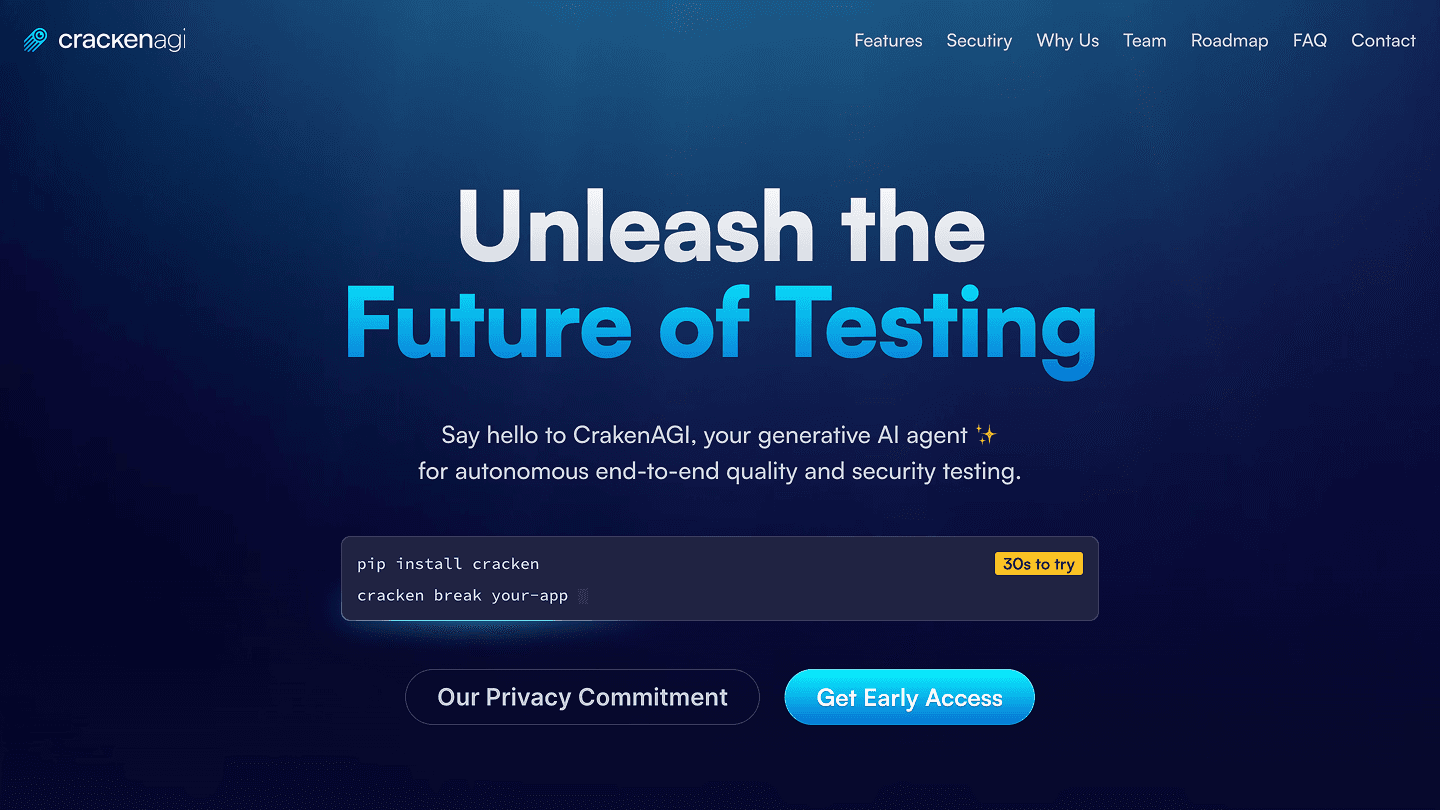
The visual language is built to feel like quality and security: disciplined and dark, anchored by a rocket-and-particles motif that runs through the site and the deck as one coherent identity.
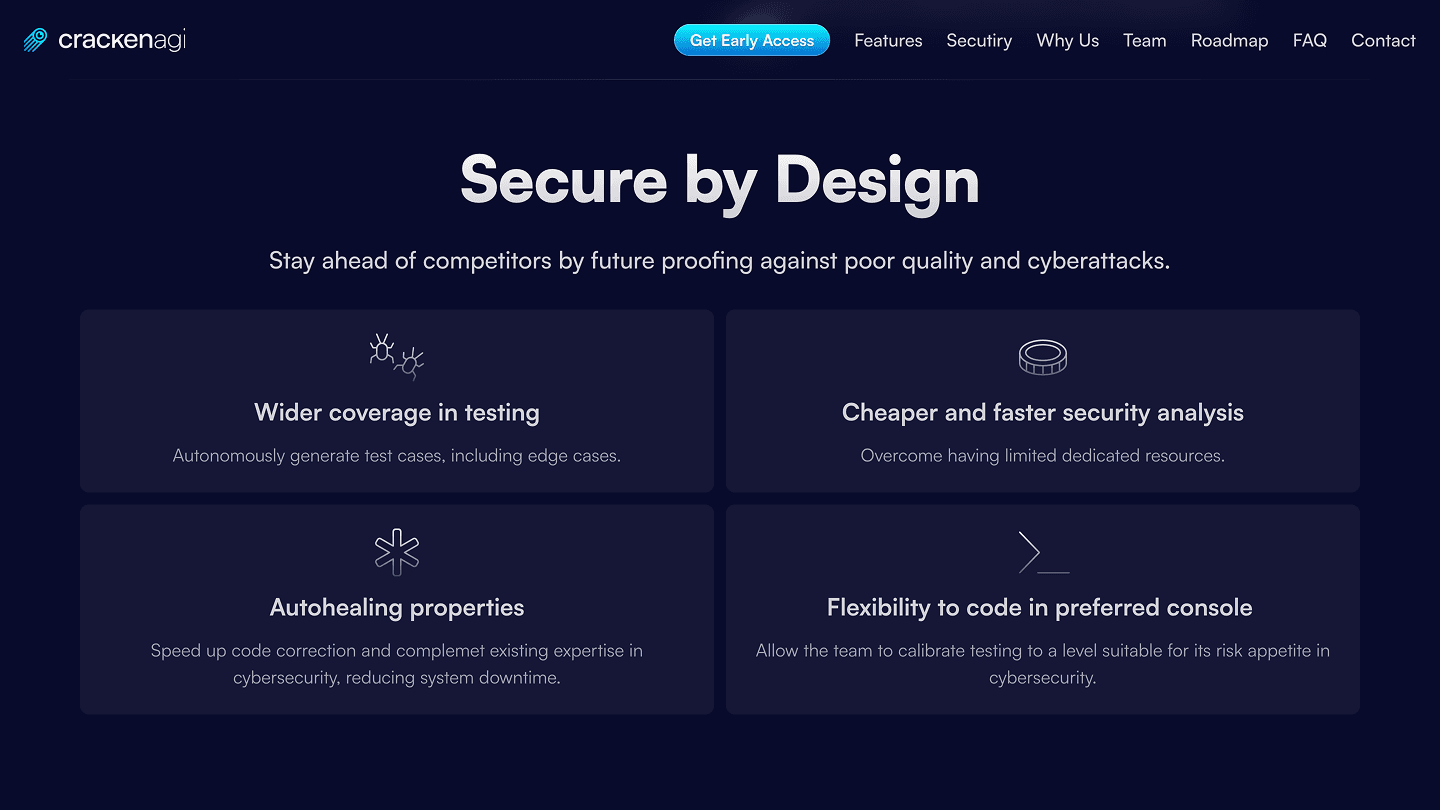
The verbal system does as much work as the visual one. Speaking to developers in their own idiom — agent commands, a fully autonomous agent with a human in the loop — is what earns credibility with a skeptical developer audience.
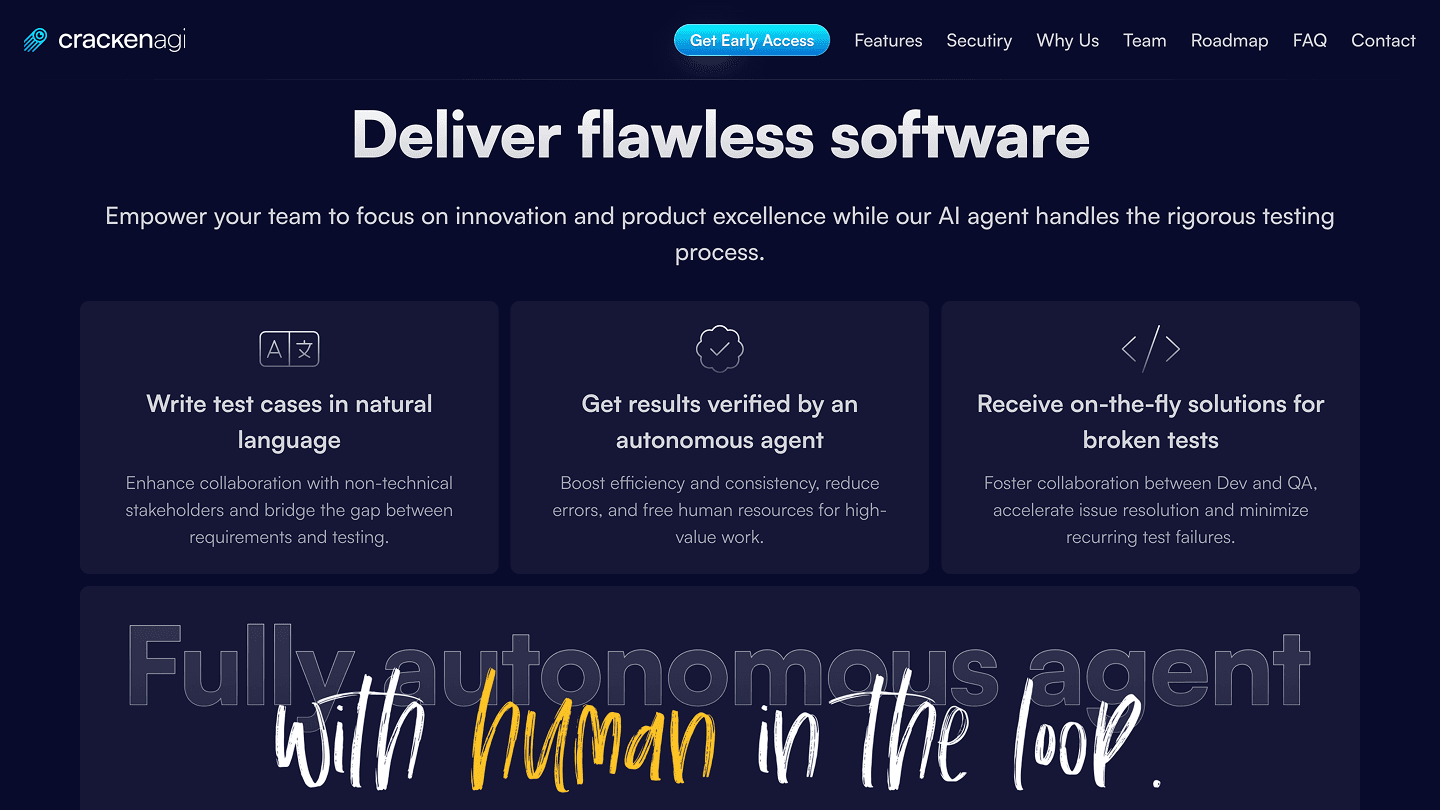
To keep the brand honest, the site shows the agent working — generating tests, finding bugs and vulnerabilities, proposing the fix — so the identity is backed by a visible product, not just styling.
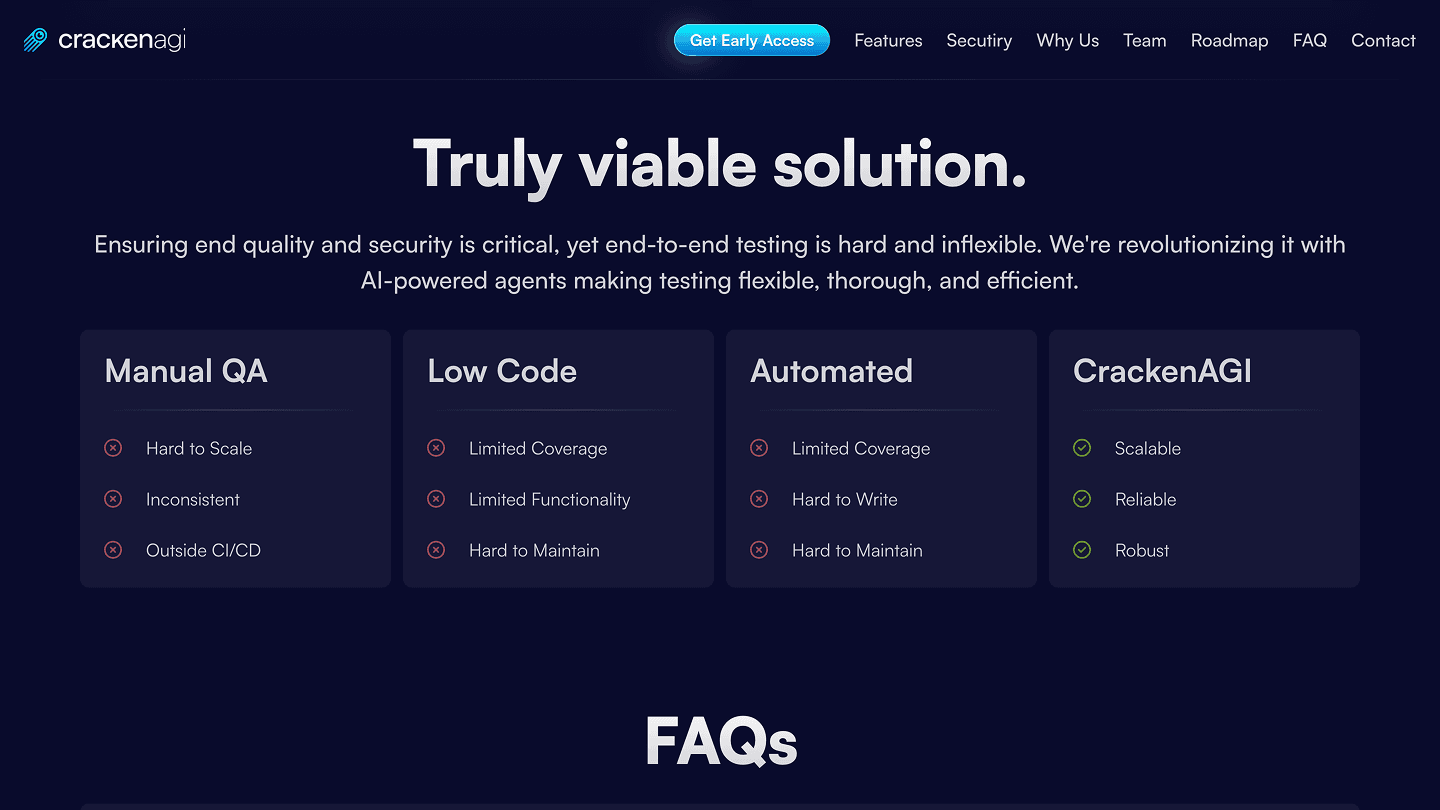
And a comparison against manual QA, low-code, and automated testing places the brand in the market — the framing the pitch deck carries to investors.