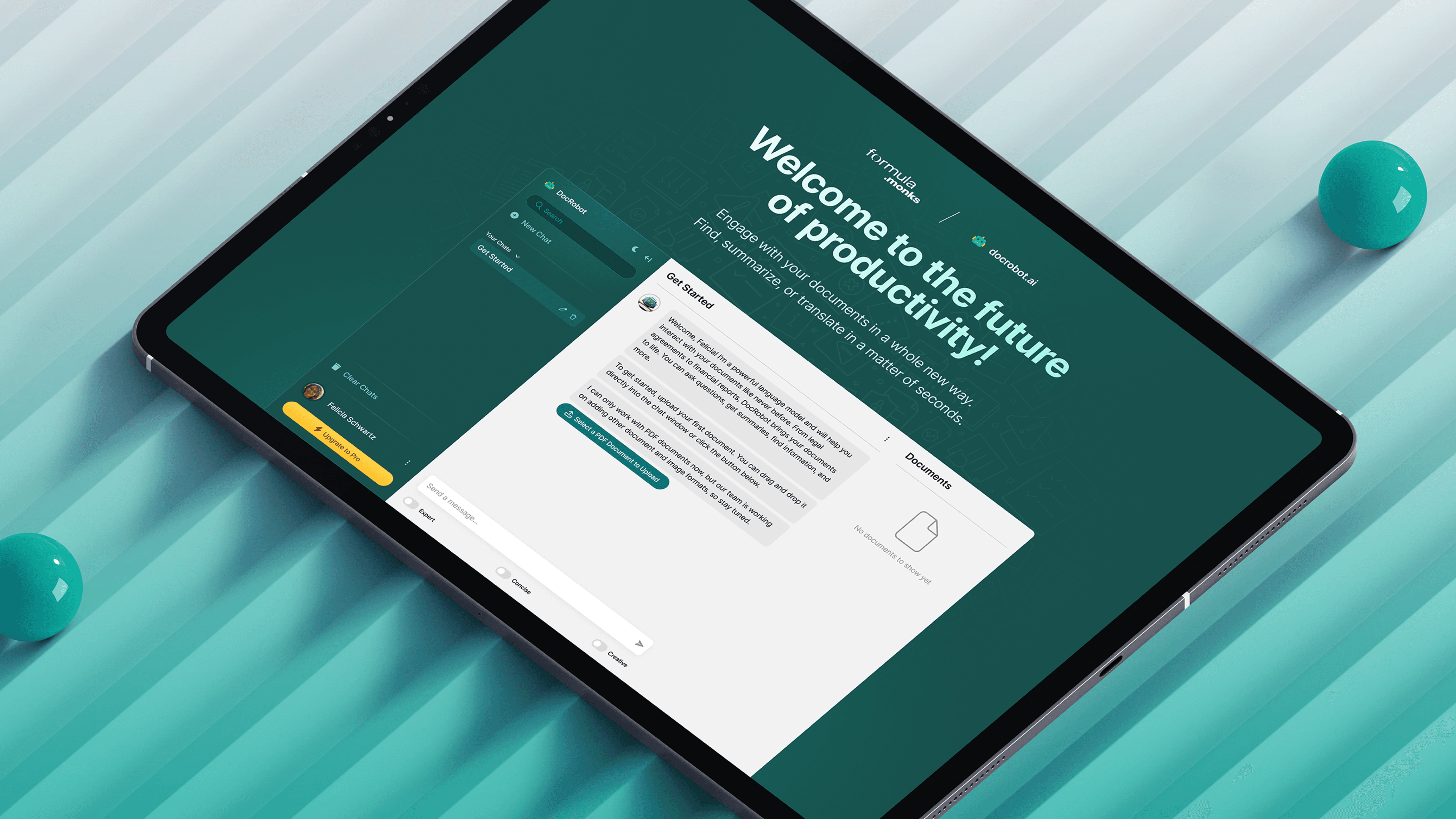
The AI wave left a strange gap: the enterprises with the most to gain were the slowest to adopt. Their highest-value work lives in documents — contracts, filings, legal and financial records — that they can't risk pasting into a consumer AI tool. The value was obvious; a path to capturing it safely was not.
DocRobot is a privacy-first take on that: a workspace where confidential documents are redacted on your own machine before anything is sent to a model, so a risk-averse team can summarize, query, and analyze files they could never paste into a consumer tool. I led design on it 0→1 at .monks — shaping both the product and the trust model behind it.
Role
I led product design 0→1 at .monks — a document-centric AI workspace and the trust model behind it: redact confidential content locally, then send only the cleaned document to the model for analysis. It shipped as a POC and became a sales and capability instrument for the firm.
What shipped
- Shipped a working POC: confidential documents redacted locally, then summarized, queried, and analyzed by a model.
- Made the trust model the product — sensitive content never leaves the machine unredacted, the precondition a security review actually cares about.
- Started with manual search-and-redact; later iterations added automatic detection of names, dates, and account numbers.
- Used the POC to open AI conversations with cautious enterprise customers — positioning .monks as a partner for their AI plans and building the team's own AI design and engineering capability.
Selected decisions
- Led with the real adoption blocker — confidential data — and made local redaction the core promise.
- Designed redaction as the first step in the flow, not a bolted-on setting — manual in the POC, automatic in later iterations.
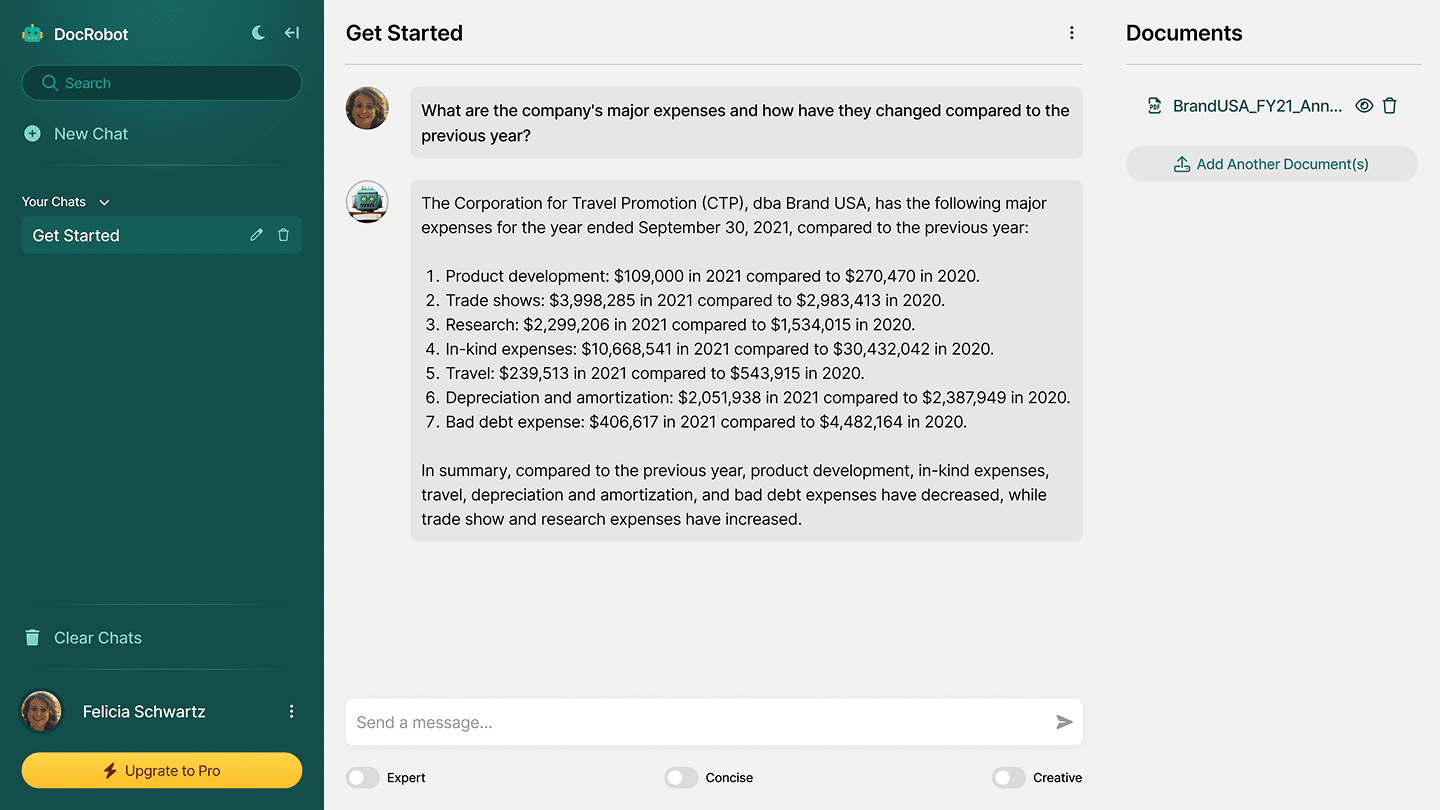
- Kept the document in view and grounded every answer in it, so a team could trace a response back to its source page.
- Built it to do double duty: a capability demo that opened enterprise AI conversations and grew the team's own AI practice.
Walkthrough
A closer look
The blocker to adoption was never the AI's capability; it was exposure. So redaction comes first, and it happens locally: a document is cleaned of sensitive terms — names, dates, account numbers — on the user's own machine, and only the redacted version is sent to the model. The POC did this as a manual search-and-redact pass; later iterations detected the sensitive content automatically. Either way, nothing confidential leaves unredacted, which is the precondition a security review actually cares about.
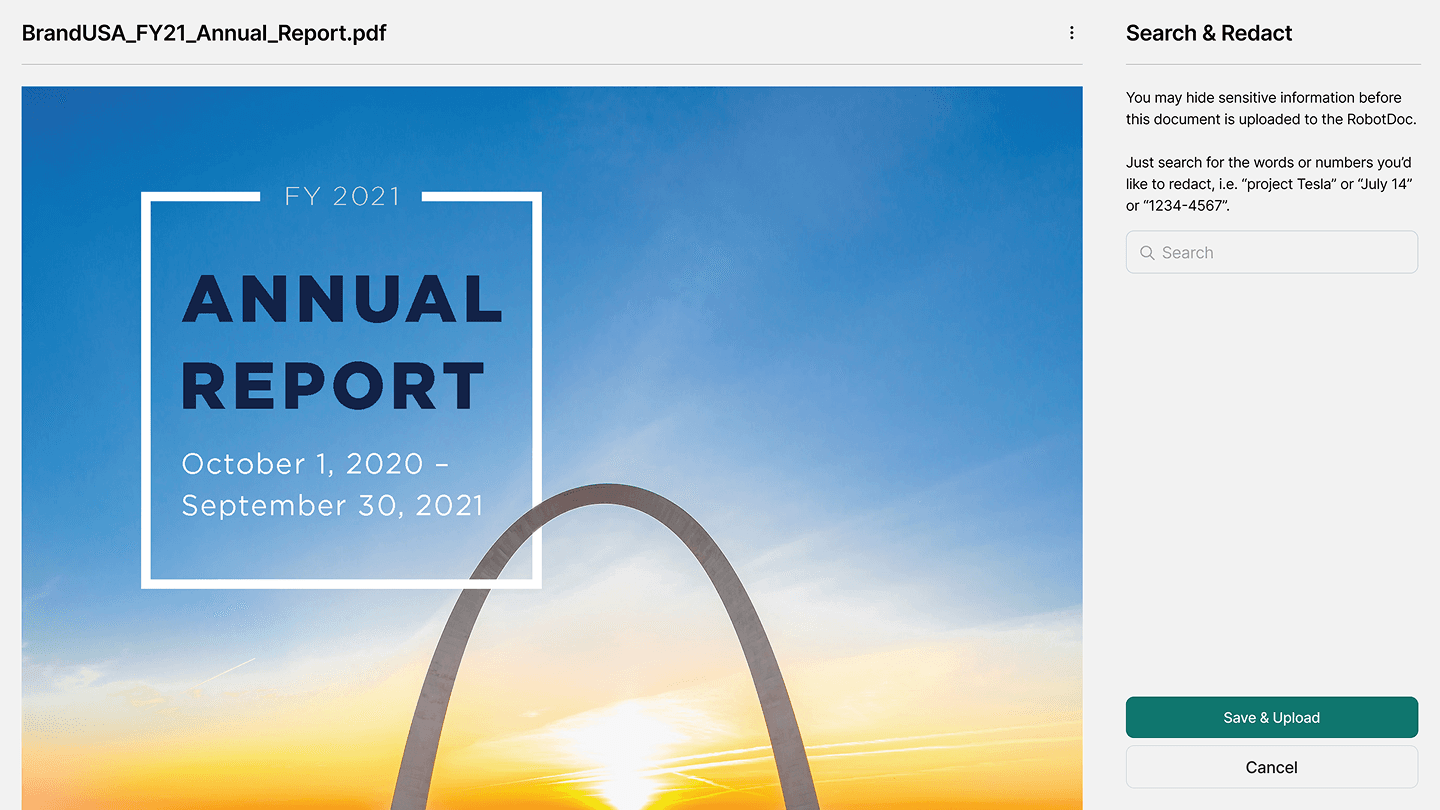
With that guarantee in place, the everyday product can be approachable. The source document sits alongside the conversation and answers are grounded in it, so it reads as a focused work tool rather than an open-ended chatbot a compliance team would worry about.
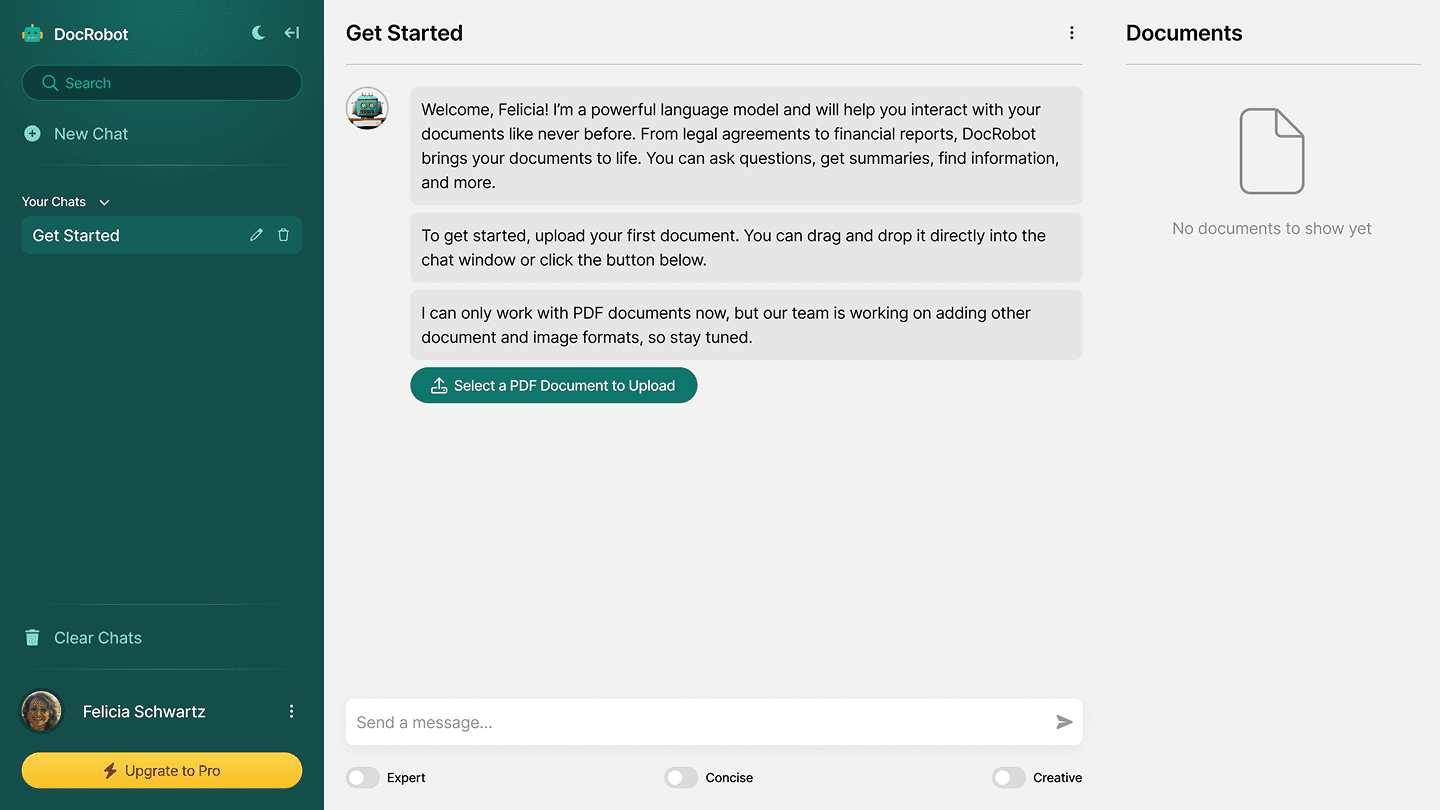
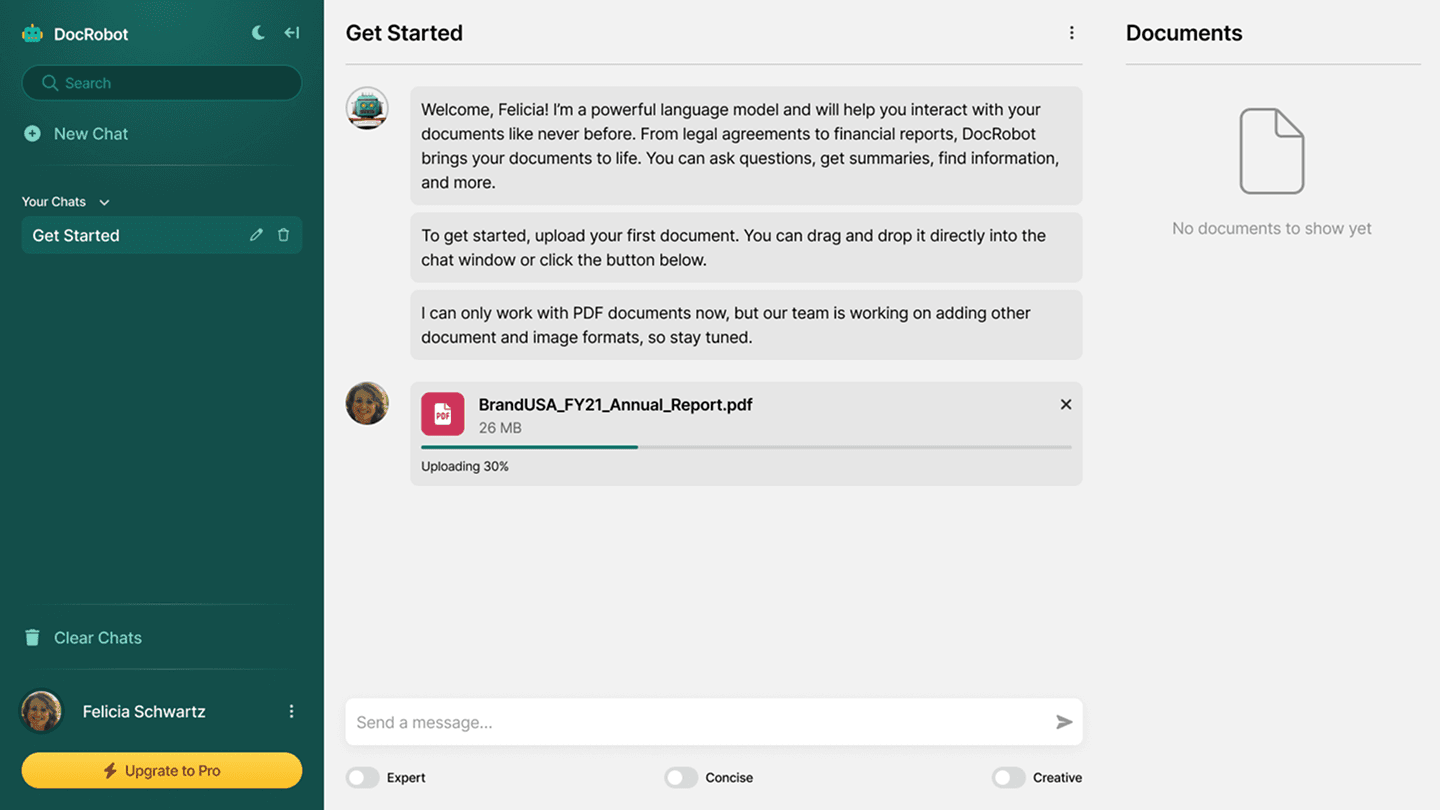
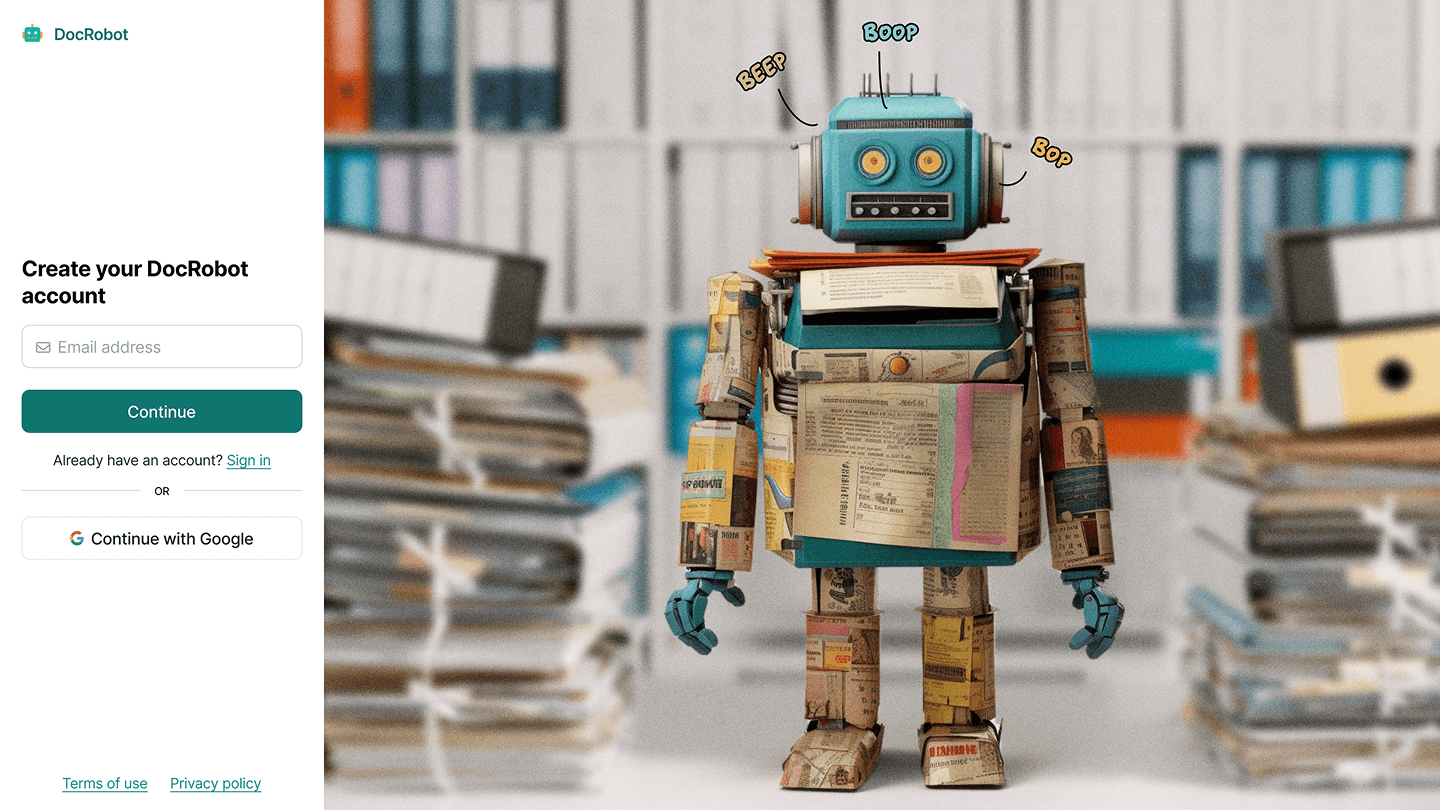
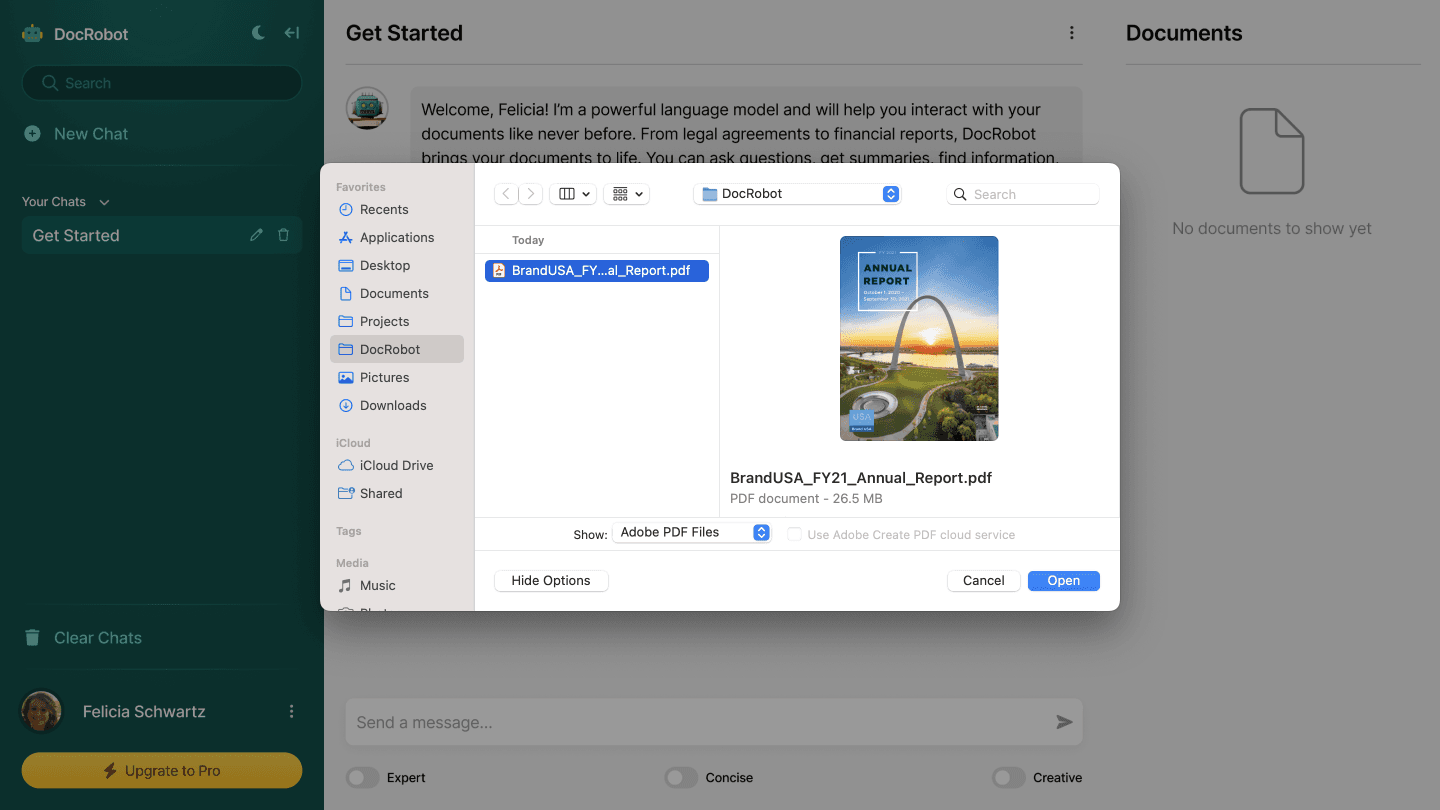
Adoption also turns on low friction, so getting started is deliberately simple — create an account, upload a file, and start — because the barrier this product removes is organizational risk, not clicks.
Teams can ask questions of a confidential file and get answers they can trace back to the page they came from.
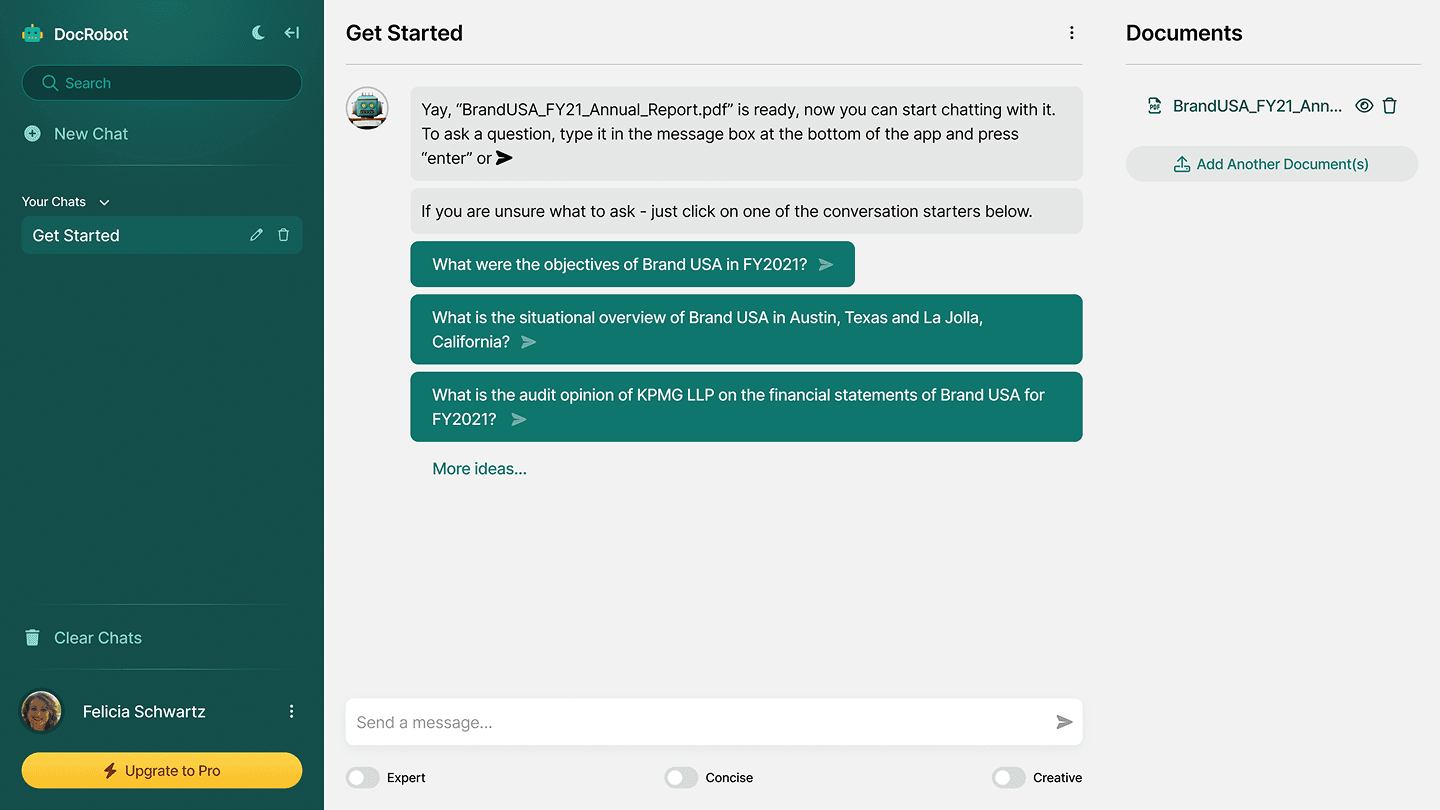
And they can summarize and extract from documents that previously couldn't leave the building — finally capturing AI's value on the material that mattered most and had been off-limits.